




The most common function of art is both an expression of original thoughts and an intimate window into an individual’s mind and heart. Socially, art is the bridge that connects human experience across a variety of cultures, backgrounds, and languages, offering a shared outlook for collective grief, joy, resilience, and other human emotions. It establishes a common culture while challenging barriers that prevent unity, capturing the spirit of an era. On a personal level, art is an act of vulnerability. It is the translation of internal confusion into a tangible form—a silent banter between creator and observer where unexpressed emotions find a voice through visible, performing, and fine arts.
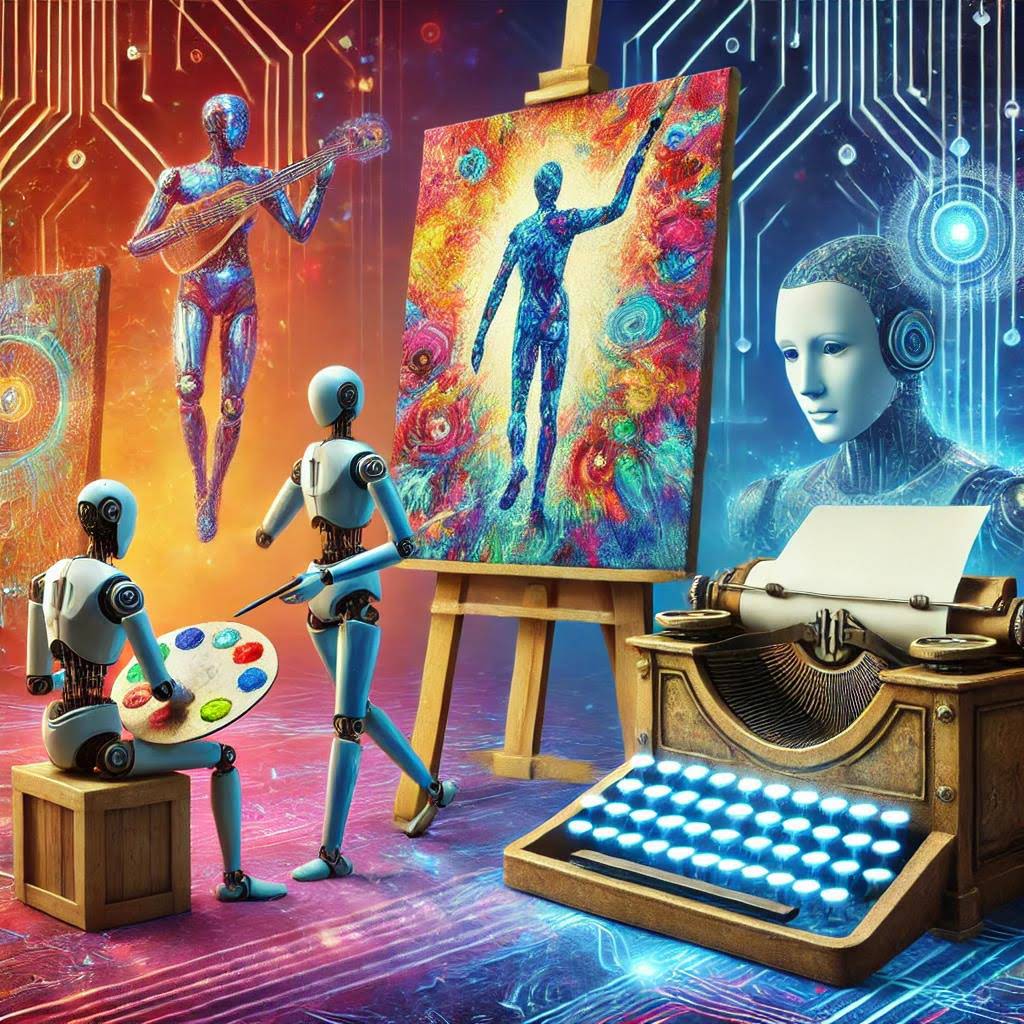
Given this nature, AI “art” challenges what it truly means to create. When an algorithm processes millions of images and exports a polished visual in seconds, it achieves an imitation of human art. Yet, technical skills alone have never been the sole definition of art. AI functions as a mirror of human history, reflecting our aesthetics back at us without understanding the weight of what it is conveying—simulating texture and form, but operating the whole time without consciousness or intent.
Art relies heavily on context and lived experience. A single brushstroke carries the process of hesitation, a line of poetry reflects a sleepless night of intangible thoughts, and a melody holds that just-out-of-reach memory which is slowly fading. These human imperfections are not flaws in the artistic process, but rather its heart. An AI model experiences neither love nor loss, possessing no motives, no underlying beliefs, and no urgency to express a truth to a greater population. It responds to prompts, navigating through what humans have already expressed rather than personal conviction.
This distinction is crucial.
Calling an AI generator an artist is not feasible, as it confuses the instrument with the artist. We do not credit the camera with the emotional depth of a photograph, nor do we attribute a symphony’s beauty solely to the violin. AI generators are undeniably powerful tools that can expand possible imagination and research, but the output itself, detached from human intent, remains a synthesis rather than a form of expression, which is what art is meant to be.
Ultimately, AI art is a mimicry. It offers a stunning surface that, in some minds, may surpass the skills of human hands, but art demands depth. Since artificial intelligence cannot feel the emotional weight of living and choose to translate that experience into expression, what it produces will remain a mirrored version of another artist’s work—the work that prompted someone to request the AI’s “artwork” in the first place.
Image source:
https://cloudxlab.com/blog/ai-in-creative-fields-the-next-frontier-for-art-music-and-writing/.