
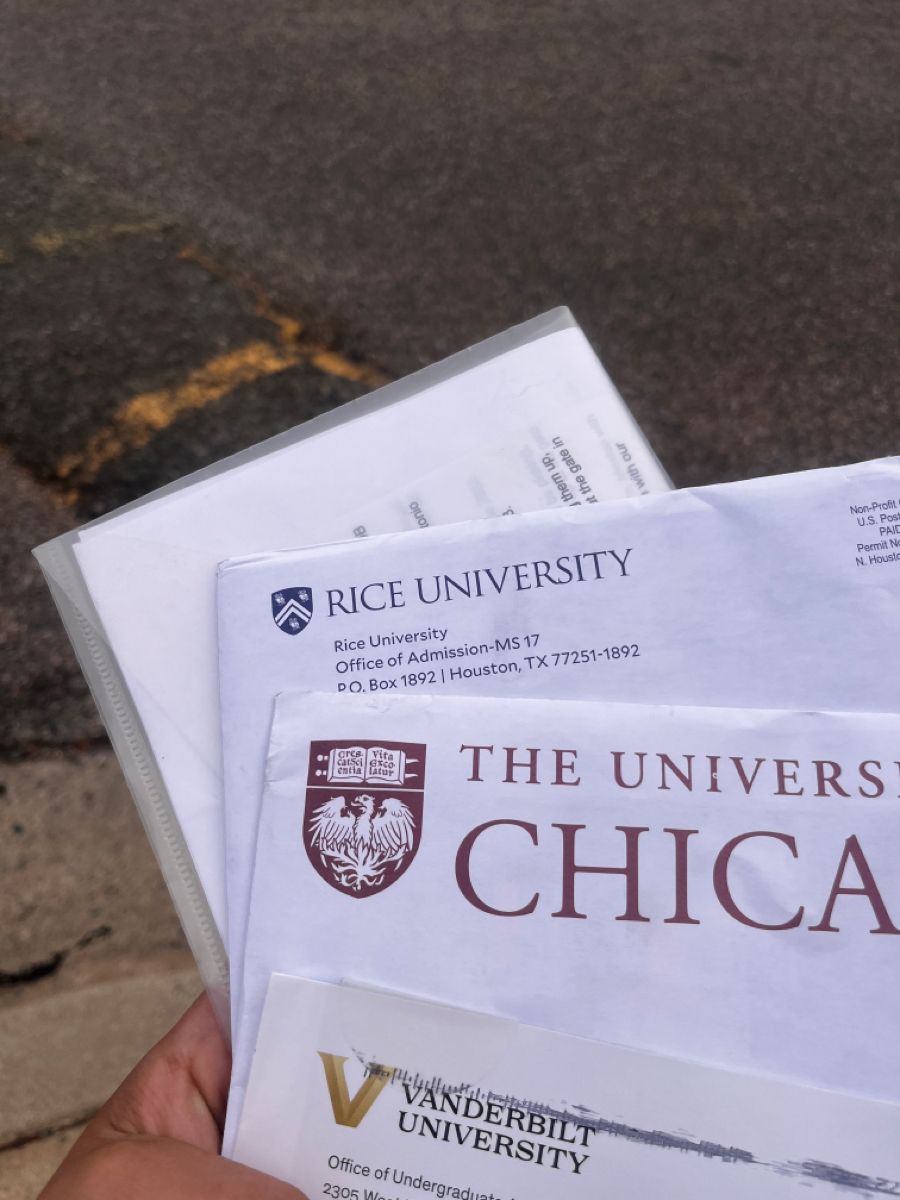





























If you want to say the 5 words, “I’m a student at Yale/Princeton,” think about why.
Is it the instant respect the name provides, the pride of your parents displaying an “Ivy Mom” bumper sticker, or the promise of a successful future these schools claim to provide?
I had made nearly 200 searches across my Google Accounts researching how to get into the top universities, all before starting high school. I spent a lot of my time stressing about how to optimize the four years I had yet to experience. Thus, I began to see high school as a four-year time bomb, ticking and waiting to see who could make the most out of it–a race I couldn’t afford to lose.
I initially came at this article with the same urgency. I wanted a head start on the race—to absorb all the information most freshmen wouldn’t think about. However, through exploring all the admission tips and strategies from my interview with the OACC, I started thinking further than any Ivy Tip YouTube video had taught me to.
From simply choosing high school courses, to building a truly memorable college application, all three counselors of the OACC offered brilliant insights into the decisions that shape a student’s application. Whether you are a freshman just beginning high school, or a junior worried about the next two years, these are the steps, resources, and strategies worth knowing before the application process officially begins.
There is No Formula for Success. (Strengthening Extracurriculars)
Before taking any concrete steps for a strong college application, you must escape the illusion of a perfect formula. Many students believe in a procedure: one passion project + hundreds of hours of volunteer work + fifteen AP courses + and a 1500+ SAT = Tier 1 schools. There is no such thing as a universal formula for admission to a school. Mrs. Trubac emphasizes, “It’s not a one-size-fits-all process. Every application is a journey, and it’s different for everyone.”
The reason a rigid formula doesn’t work is because schools want a story out of a student, not a completed, polished resume. As you go through high school, you’re meant to realize your interests and explore them deeply. Mr. Statile advises, “It’s quality over quantity; you must dedicate–not add.” Each step you take in high school, whether it’s joining a club or leading a project, will later come together to form an image of who you are. If you are following a timeline of achievements, you may end up reaching the finish line and realizing that you never did anything that truly captured the real you.
Ms. Jackiewicz says, “Be true to you—it’s your journey. You should be embarking on a path of your own—not someone else’s.”
The goal is to find a passion you are genuinely interested in; the goal is not to call it a passion project and check it off as soon as you make progress—it is to follow through, develop ideas, and sustain them. These steps demonstrate initiative and commitment, which are key qualities in a student that go beyond an application. Your ambition through these actions guides the admissions officers in framing who you are as a person, but it also helps you develop yourself throughout high school.
Finding Your Passions Using Resources Around You
It’s easy to tell students to follow their interests, but much harder to know where to begin when you don’t have any. At any point in high school, you might feel lost, wondering how everyone around you has everything all figured out. In reality, discovering your passions is not a fixed decision made overnight, but a long journey of exploration, epiphanies, and elimination.
Mrs. Trubac reassures, “It will come on its own.” High school is designed for students to develop into the person they want to be, but it is up to you to allow that discovery. So how do we do that?
Mr. Statile counsels to “analyze your passions.” Begin to think about which classes you like, which you don’t like, and why. Do you like the problem-solving of math, or business patterns in a club? Then maybe you would enjoy hobbies based in numbers and observation, and perhaps it could lead to an entrepreneurial career.
You don’t have to figure out anything alone, either. Holy Angels is a school that constantly supports you and offers resources to help you explore your choices. Mr. Statile encourages the use of Naviance, a tool for career exploration located in Blackbaud, and Ms. Jackiewicz agrees that it’s truly a useful tool: “Students should take the initiative to explore Blackbaud further.”
Mrs. Trubac says, “During counseling meetings, we guide the conversation to get a sense of the subjects you are interested in. Also, your teachers are helping you towards the area of interest and your future major.” Even when you do not realize it, Holy Angels, as a school, is aiming to solve the big puzzle with you. Never be frightened to change your mind. Students should never be afraid to test-drive anything. Join new clubs and try something completely foreign—take the risk. “You never know what door might open for you,” Ms. Jackiewicz adds.
Academics: The Base of a Strong Application
“For any top-tier schools, it’s your academic transcript, standardized test scores, and the rigor of your curriculum,” says Ms. Jackiewicz.
If you are a student wanting to aim for something like the top 20 schools in the nation or worldwide, a load-bearing factor is your academic transcript. Imagine the admissions office as a party. For certain schools, the transcript is your ticket waiting for punches. Without a decent transcript, you won’t get the opportunity to collect them for your extracurriculars and other important factors.
This isn’t always the case. Some students with less competitive academic records may still gain admission if other aspects of their application stand out immensely, but if you’re shooting for an Ivy League school, get that ticket as close to golden as you can.
Academic strengths are shown through the two sections: your high school transcript and standardized test scores. Holy Angels encourages every student to take the SAT or ACT at least once. Mr. Statile repeatedly mentions the importance of the scores of the tests, and even mentions, “Holy Angels gives every student from freshman year the resources to achieve a high score.”
All three college counselors mentioned you should get ready to start preparing around the end of sophomore year. It’s recommended that you take the SAT or ACT after you have properly learned the material that will be on the tests, but when to begin is a personal choice.
The second factor of the academic foundation is your high school transcript. This initially starts with choosing the right classes for you.
Ms. Jackiewicz shares a previous experience about class arrangements: “We were talking about this with the Georgetown college admissions before, but colleges want to see an A+ in an honors class rather than a B in an AP.” You must prioritize what level is best suited for you at the moment, rather than what would look better on paper. Yes, the rigor of your classes is an important factor, but admission officers would rather see you thrive in a class than struggle in one that isn’t right for you.
To arrange well-suited classes for you, talk to your teachers. Ms. Jackiewicz highly recommends this, saying, “For core academic classes, your teacher knows you best.” Then, you should discuss your next steps with your college counselor to see potential impacts.
“Ivy League schools are not the end all, be all.” – Mrs. Trubac
Personally, I thought my life would flip upside down if I couldn’t get admitted to a school everyone knew the name of.
High school was never meant to be a race toward the most popular or “prestigious” colleges, but a journey of discovery to find the school where you’ll truly excel.
If a school is ranked top 10 in Google, it doesn’t mean it is the best school for everyone. “If you want to be a student at that school, tell me why,” Mrs. Trubac says. You should strive to go there because you love their campus, education, and community—not its place in college rankings. Mrs. Trubac asks, “When you do go to that good school because you worked your way in, what if you don’t end up liking any of the curriculum or the community?”
All three college counselors repeatedly told me that a huge step any student can take during high school is to explore the kind of school they would like to go to.
Mrs. Trubac adds, “You could be on a trip to D.C. and just drive around Georgetown to see the surroundings… start somewhere and continue to search from there.”
Final Words of Advice
The last question I asked during my interview was, “Which choice do you think is more important: aiming to find the students’ true passion or keeping a strong academic transcript?”
All three counselors resolutely answered “passion.”
Ms. Jackiewicz’s quote, inspired by her own mother, explains it all: “If you enjoy what you do, you will never work a day in your life.” If you love what you’re learning about, you automatically have the motivation to explore and study further. Ms. Jackiewicz adds, “Stress is par for the course, but it’s the way you manage it that matters.”
High school can seem very overwhelming at different times, but it’s your choice on how you react to it.
“You have so much more power in your hands than you think you do– empower yourself more,” Mrs. Trubac concludes. When you feel lost or scared about the future, realize that you still have the power to make your next few years so much stronger.
Maybe high school was never a time bomb, but a clock I mistook for something dangerous.
These years will pass regardless; what matters is whether I spend them chasing someone else’s definition of success or discovering my own.
Image Source: