





















El Niño is a natural climate pattern that can have an effect on temperatures, droughts, rainfalls, and storms globally. Scientists are monitoring this closely because its effects can threaten agriculture, water supplies, and communities since weather patterns are unpredictable. Forecasts can make predictions on when El Niño will have the strongest effects; predicting exactly when it will conclude remains unresolved.
According to the National Oceanic and Atmospheric Administration (NOAA), El Niño occurs when sea surface temperatures in the central and eastern tropical Pacific Ocean are warmer than usual. The temperature changes have an effect on the atmospheric circulation and can change weather patterns in various regions. With the placement of NOAA monitors, atmospheric conditions and ocean temperature strength can be determined. Essentially, this helps predict if El Niño will continue to develop in the following months.
El Niño tends to develop over several months, then strengthens, and lastly weakens. The peak is mostly identified when ocean temperatures in the tropical Pacific are warmest compared to normal. Scientists use climate models and ocean observations to predict when the event will reach its climax. Seasonal forecasts can suggest an estimate, but not an exact period. The International Research Institute for Climate and Society (IRI) publishes climate forecasts that help scientists and the world comprehend the possibility of El Niño, La Niña, and normal weather patterns.
El Niño will not end abruptly once it reaches its peak. Instead, the atypical warm ocean temperatures slowly decrease, and the climate system might eventually return to neutral conditions. Another possibility is a transition into La Niña. The World Meteorological Organization (WMO) works to monitor and predict weather conditions across many regions of the world. Their most recent climate update explains the expected development of El Niño and La Niña and the possible consequences for numerous areas. However, the occurrence of this transition depends on changing ocean and atmospheric conditions, as scientists renew their predictions.
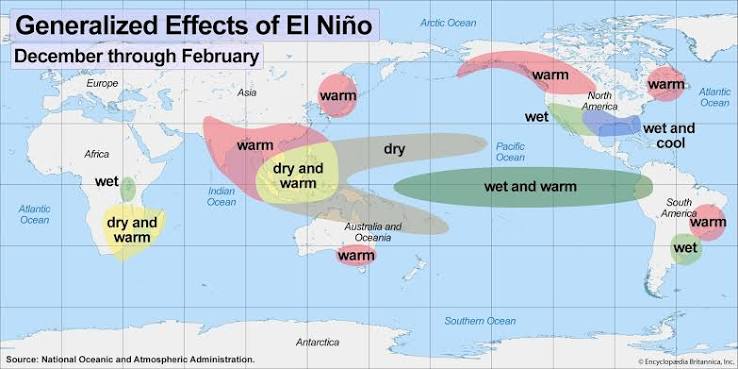
El Niño can cause some regions to experience heavier rainfall and flooding, while others might endure reduced rainfall and drought. In South Asia, changes in rainfall patterns can create obstacles for water availability and irrigation.
Scientists can estimate when El Niño is most likely to peak and when it slows down, but neither date is absolutely certain. The combined efforts of NOAA, the IRI, and the WMO continue to monitor ocean temperatures and atmospheric conditions to improve their forecasts. Tracking this is vital since El Niño can have an impact on weather, food production, and water availability worldwide.
Sources:
https://iri.columbia.edu/our-expertise/climate/forecasts/enso/