
















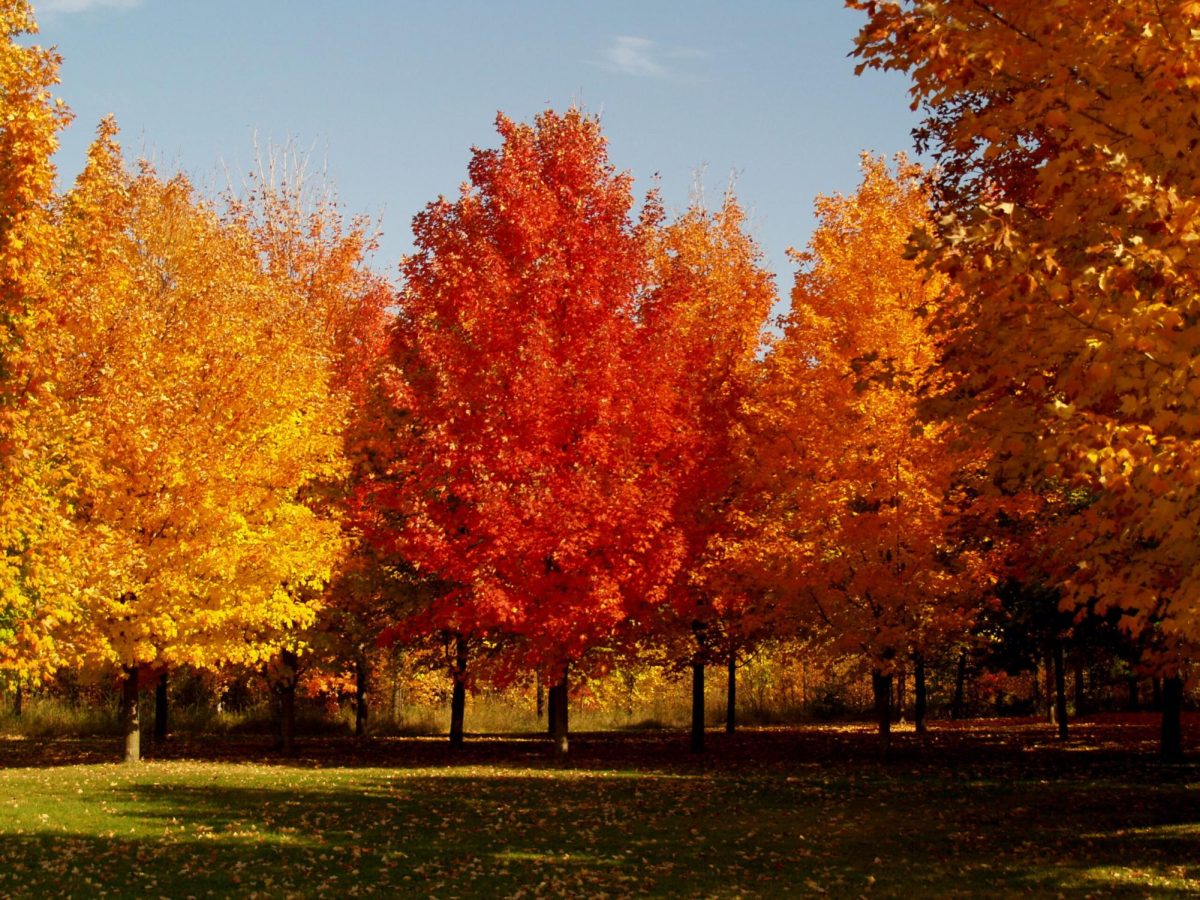













During the summer, the sky is bright, the birds sing, and the sun heats your back like no other warmth. It’s no wonder summer is so many people’s favorite season. After summertime, however, comes the autumn season, and it becomes time again to pack your book bag and drag yourself to school each morning. The sky is cloudy and gray, the air feels as though the weather is perpetually stuck just before the Sunday rain, and you have a heavy stack of homework to look forward to after school. Why is it that our mood is so dependent on the seasons? Is it really just the weather?
In the scientific world, the fluctuation of our emotions in relation to the seasons can often be attributed to SAD—seasonal affective disorder. SAD is defined as a predictable onset of depression that follows a seasonal pattern, often emerging in the fall and winter months when daylight hours are shorter. Some symptoms of SAD may include having a persistent low mood or gloomy outlook, feeling sad or hopeless, feeling a loss of interest or pleasure in activities you used to enjoy, social withdrawal, appetite changes, difficulty sleeping or oversleeping, and thoughts of death or suicide.
In most cases, SAD begins in early adulthood and is much more common in women than men. SAD is also prevalent in people with depression or bipolar disorder—most especially bipolar II disorder, which involves repeated depressive episodes and hypomanic episodes. Having a family history of depression, anxiety, or other mood disorders may also increase your vulnerability to SAD. Furthermore, people with SAD tend to have other mental disorders like attention-deficit/hyperactivity disorder, eating disorders, anxiety disorder, or panic disorders.
Although the most common type of SAD is winter-pattern SAD, occurring in the fall or winter months, it is not to say that summer-pattern SAD does not exist either. Summer-pattern SAD is a rarer form of seasonal depression thought to be mediated by heat and humidity. Additional symptoms for summer-pattern SAD may include insomnia; poor appetite, leading to weight loss; restlessness and agitation; anxiety; and violent or aggressive behavior.
While there have been multiple attempts to research the specific scientific reason for SAD, it is best to understand that SAD, like other psychiatric illnesses, should be considered as a complex disorder that results from the interactions of several factors acting at different levels. Due to the inherent connection between SAD and sensitivity to environmental light conditions, one primary focus for research in this area are chronobiological mechanisms, which are the internal cellular, genetic, and neural processes that generate and regulate biological rhythms.
One hypothesis states that if a clear association could be drawn between SAD prevalence and increasing latitude, the notion that biological adaptations tied to the short days of winter are the primary factor distinguishing SAD from other mood disorders would be supported.
A study by Erin Michalak and Raymond Lam reviewed twenty-two studies considering the relationship between latitude and SAD and found that there was a positive correlation between increasing latitude and SAD prevalence, and, curiously, no correlation found between latitude and summer-pattern SAD.
Although this would support the original hypothesis, there is a paradox in studying a possible relationship between SAD and latitude that states that over time, populations more prone to seasonal affective disorder may choose to migrate south, whereas less sensitive populations may remain in northern latitude. This could weaken the correlation between latitude and SAD in large epidemiological studies—studies of how often diseases occur in groups of people and why. This paradox is the same reason why negative correlations between latitude and rates of SAD have been found as well.
Researchers have also found that people with SAD may have increased levels of melatonin during winter depressive episodes. Melatonin is a hormone secreted by the pineal gland in response to ambient darkness. In animals, the duration of melatonin secretion at night is longer in winter than in summer due to the shorter hours of daylight. This regulation of seasonal changes in behavior is able to track changing times of dawn and dusk, and it allows an organism to better adapt to seasonal environmental conditions. If researchers are able to find a link between the photoperiodic mechanism of animals and melatonin levels in patients with SAD, it would lend support to the hypothesis that SAD is a chronobiological disorder.
SAD may also be linked to an imbalance of serotonin, which is a hormone that regulates mood, sleep, digestion, nausea, wound healing, and bone health. A serotonin deficiency can lead to having a persistent low mood, feelings of sadness, anxiety, panic attacks, irritability, and having a higher risk of conditions like depression, obsessive-compulsive disorder (OCD), or post-traumatic stress disorder (PTSD). Additionally, winter-pattern SAD can also be associated with lower levels of vitamin D, which can be caused by reduced sunlight exposure. Vitamin D helps promote the activity of serotonin, so a deficiency of vitamin D can lead to a deficiency of serotonin and, therefore, contribute to a low mood.
Although the exact causes of SAD are still undetermined, there are various treatments used to assist someone when they are struggling with SAD. It is important to remember that feeling sad or hopeless is typical for people with SAD, especially during the onset of depression in the fall and winter, and there is always help available.
The foremost treatment for SAD is light therapy. Patients with SAD sit in front of a very bright light box every day for about 30-45 minutes. This is typically done first thing in the morning from fall to spring. The first studies of light therapy in SAD were designed to extend the photoperiod, meaning the daily duration of light an organism receives during a 24-hour cycle, in winter by providing artificial light exposure both early in the morning and later in the evening.
The light box used in light therapy, which is about twenty times brighter than ordinary indoor light, filters out the potentially damaging UV light—however, people with certain eye diseases or people taking medications that increase sensitivity to sunlight may need to use alternative treatments or use light therapy only under medical supervision.
Psychotherapy is another treatment for SAD, and it is also referred to as talk therapy or counseling. Psychotherapy teaches people with SAD new ways of thinking, behaving, and changing habits that can contribute to depression. Cognitive behavioral therapy (CBT) is a type of psychotherapy aimed at helping people learn to challenge and change unhelpful thoughts and behaviors to improve their depressive and anxious feelings. CBT has been adapted specifically for patients with SAD, referred to as CBT-SAD, and it focuses on replacing negative thoughts related to the season associated with onsets of depression and identifying pleasant indoor or outdoor activities to offset the loss of interest typically experienced in either the summer or winter.
Researchers directly compared the effects of psychotherapy and light therapy, and they found that the effectiveness of both treatments were relatively similar in the success of improving SAD symptoms. Researchers also found that some symptoms improved faster with the use of light therapy; however, a long-term study that followed SAD patients for two winters found that the positive effects of CBT seemed to last longer.
Light therapy is a treatment specific to winter-pattern SAD, whereas treatments like psychotherapy and anti-depressants are used to treat depression in general, including both winter-pattern and summer-pattern SAD. However, as summer-pattern SAD is much less common than winter-pattern, there are no treatments specific to summer-pattern SAD.
Dealing with seasonal affective disorder, or even depression in general, is not easy. As the fall and winter seasons come back around this year, remember that it is completely normal to feel stressed or overwhelmed—but also remember that there are many ways to mitigate those feelings of anxiety and depression. It is especially common for students struggling with heavy workloads and packed schedules to be diagnosed with SAD; school is often a contributing factor. If you think you may be struggling with SAD or another anxiety or mood disorder, tell a trusted adult, because continuing to live with SAD symptoms is not always necessary.
Sources:
www.nimh.nih.gov/health/publications/seasonal-affective-disorder.
www.mayoclinic.org/diseases-conditions/seasonal-affective-disorder/symptoms-causes/syc-20364651.
medlineplus.gov/seasonalaffectivedisorder.html
pmc.ncbi.nlm.nih.gov/articles/PMC3202491/
www.uhs.wisc.edu/mental-health/thrive-online/seasonal-affective-disorder-sad/