




















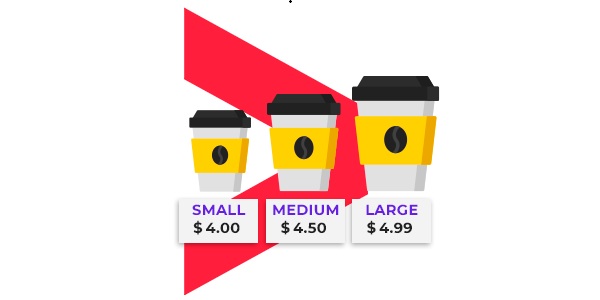

Picture it– you walk into Starbucks after school, and you place your order, but when the barista asks for the drink size, you look at the prices, and you have three choices. Your first option (12 oz) is $5.00. Your second choice (16 oz) is $6.50. Your last choice (20 oz) is $7.00. So, what do you choose? If you chose the third option, then you fell for the trap of decoy pricing.
Decoy pricing, according to Impact Analysis, is “a psychological pricing method that uses an intentionally less expensive offer—a decoy item—to make another option more appealing.” In basic terms, sellers give you three options: a competitor, a target, and a decoy. In the scenario above, the 12 oz drink is the competitor, the 16 oz drink is the decoy, and the 20 oz drink is the target. The decoy item is priced very close to the target, but it’s clearly of much lesser value, because when you divide ounces by cost, you find out that the decoy is there to make the largest option most appealing. After all, the target offers the most ounces for only slightly more money. So, even if you like doing mental math on the spot with a long line behind you, you might find yourself choosing the target without realizing how the pricing influenced your decision.
Decoy pricing can encourage consumers to spend more than they originally intended, so if someone says that the decoy is the best option, take a second look. One way to spot a possible decoy is to compare the value you get for the price. If the medium option is only slightly cheaper than a much larger option, the medium option may be designed to make the largest option seem like the better deal.
Maybe you want the large drink because you’re really thirsty, and that’s totally okay. But if you’re choosing it simply because the decoy makes it seem like a better deal, take a second to think about whether you actually need it.
Sources:
https://www.impactanalytics.ai/blog/decoy-pricing
Image Sources: