

















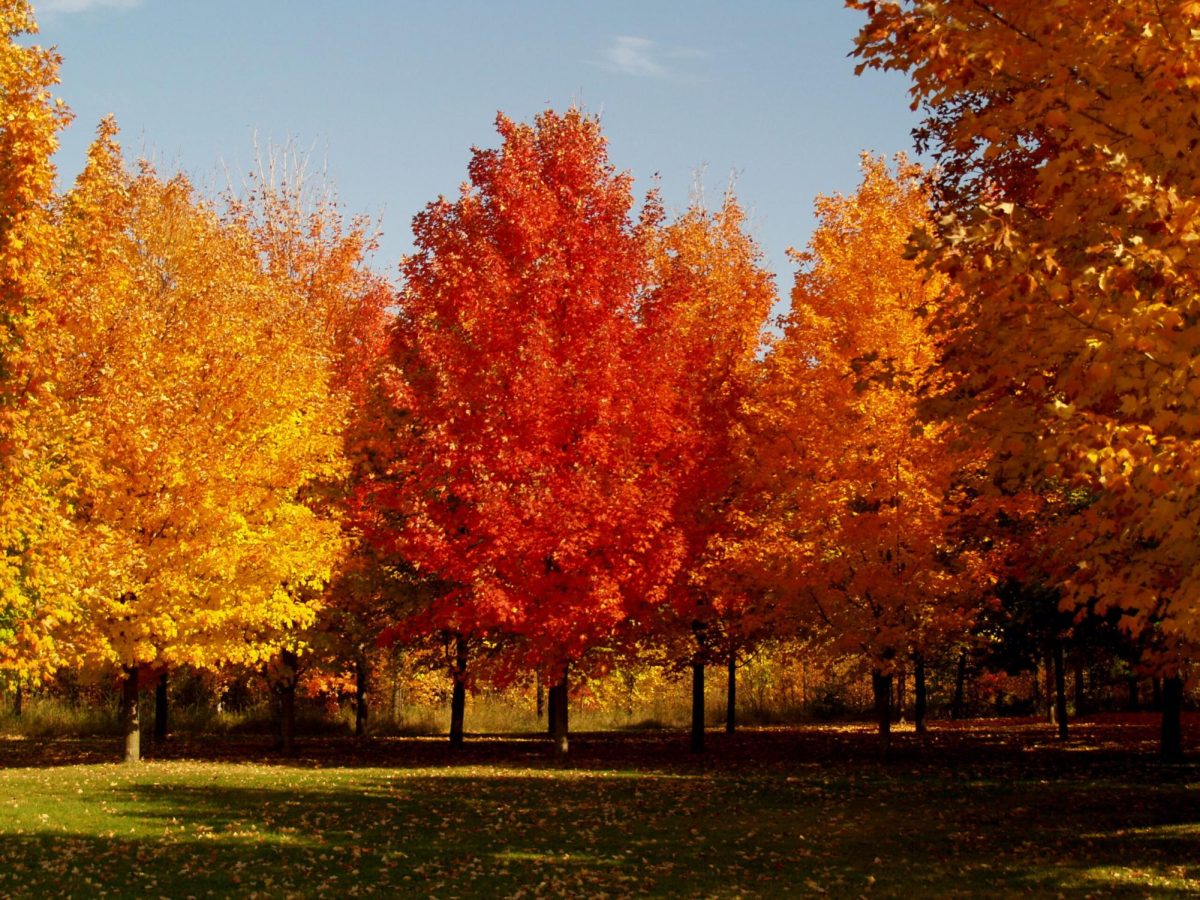











It’s a nice, breezy autumn day, and you decide to take a walk around your neighborhood. As soon as you step outside of your front door, you hear a “crunch.” Looking down, you see a huge leaf now cracked into pieces on the ground. Turning your head around, you notice countless leaves piled up in your backyard: dark red, orange, yellow, sage green, brown.
Every autumn at the Holy Angels campus, we get an art show when leaves begin to turn from green to yellow, and then into vivid reds, oranges, and even purples. During the summer, playing sports on the AHA field means standing under a blazing sun, with tall greenery towering overhead. Now, autumn has transformed the entire outdoor campus, leaving us with a whole palette of nature’s colors above and around us.
However, the leaves aren’t just magically changing as time passes by; there is some science involved in the process.
Leaves stay bright green because they are packed with chlorophyll, a pigment that trees use to convert sunlight into nutrients during warmer months. This green is so dominant that it completely hides any other colors hiding inside the leaf cells. When autumn arrives, the trees stop producing chlorophyll, and the green pigment breaks down. As the green fades, the true colors underneath are finally revealed, acting as a natural fingerprint for different tree species. Besides chlorophyll, two main pigments create the classic leaf colors that we see. The first pigment is called the carotenoid, which is present in the leaf all summer and reveals colors of yellow, orange, and brown. The second pigment is anthocyanin, which is produced by the tree in the fall, giving their leaves their vibrant red tones.
The different pigments can create fall colors more exotic than the standard red, orange, and yellow, too, as a mix of chlorophyll breakdown and heavy anthocyanin production sometimes leads to purple, magentas, and deep, bronze-colored leaves. Tannins also remain in the leaf as the chlorophyll breaks down, leaving behind brown and tan colors.
I think the different leaves are similar to the students in Holy Angels. Whether Angels are starting their freshman year, as something of a green leaf, going through middle phases as yellow leaves, or one step from full departure like a brown leaf, they all have something in common.
In science, the breakdown of chlorophyll isn’t just a permanent ending, it is a pause. The tree is simply saving its energy and preparing itself to survive the winter so it can bloom with new life when spring arrives. For the Angels walking across this colorful campus, whether as freshmen or seniors, our journey at Holy Angels has the same purpose. We take away the lessons of each season, each class, each argument, and each friendship, holding our experiences deep within our minds, knowing that this temporary autumn shift is exactly what prepares us to eventually bloom into the next chapter of our life.